
📚 Notes from the Circ Desk, vol. 2

Last week’s Would You Rather: Would you rather live to be 150 years old or 50 years old?
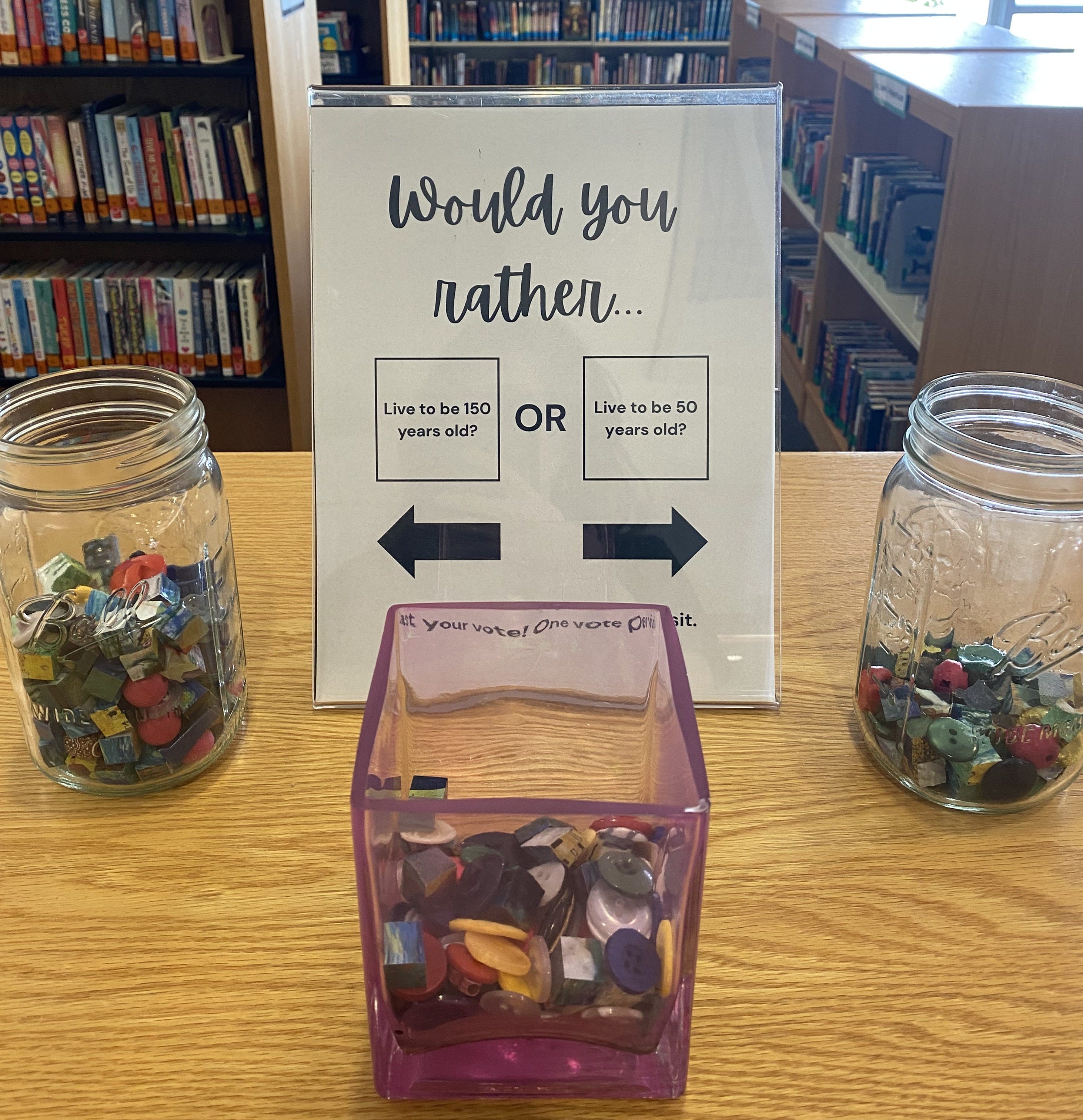
This question was suggested by a high school volunteer. She was one of my 8th graders last year and visits on Fridays after school to shelve. This question was a Do-Now in her English class, and her take really highlights the difference between high schoolers and middle schoolers: she and her classmates would rather live to 50 because living to 150 would mean watching all your loved ones die. As the votes above suggest, many middle schoolers want to experience life for as long as possible!

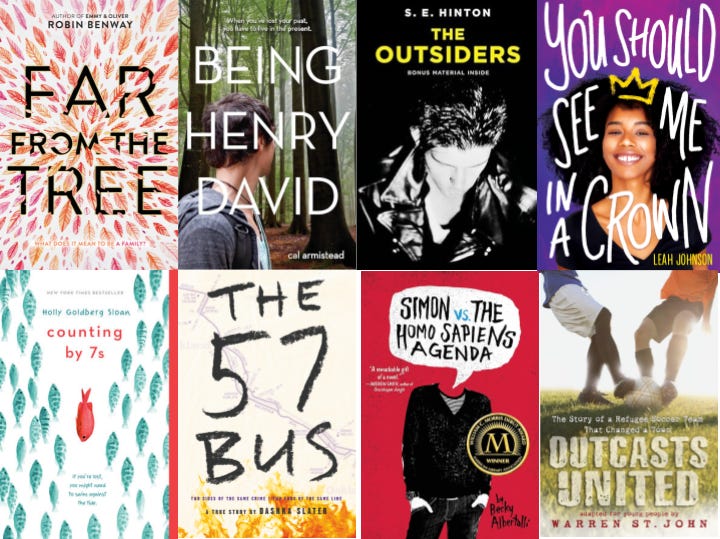
This week started off with an 8th grade book tasting. Each grade at my school runs a literature circles/ book club-style choice unit in which students rank their choices from a list of books and are put into small groups. The 8th grade titles revolve around identity and society, including
Far From the Tree by Robin Benway
Being Henry David by Cal Armistead
The Outsiders by S.E. Hinton
You Should See Me in a Crown by Leah Johnson
Counting by 7s by Holly Goldberg Sloan
The 57 Bus by Daksha Slater
Simon vs. the Homosapiens Agenda by Becky Albertalli
Outcasts United by Warren St. John
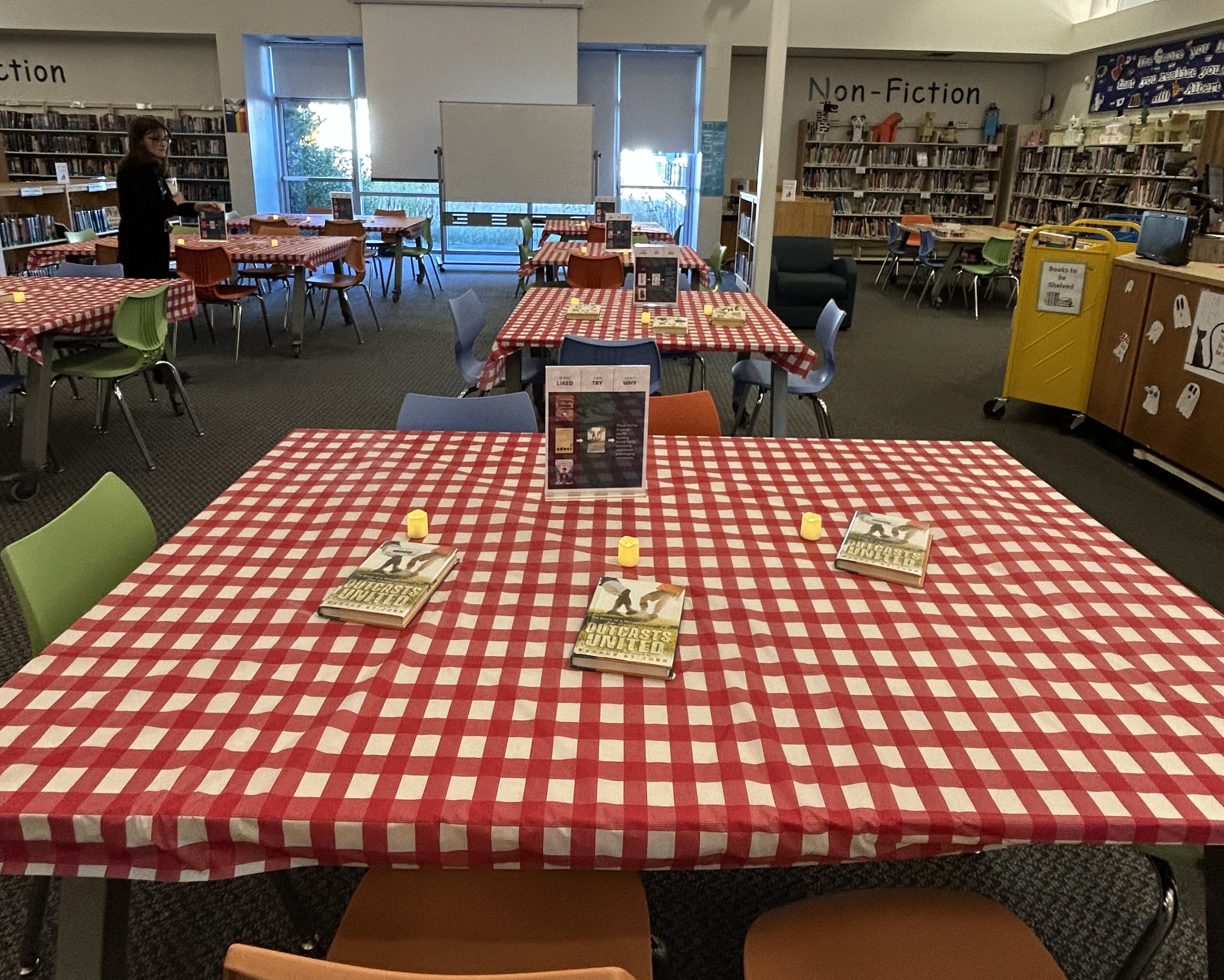
One of the 8th grade teachers asked if we could collaborate on a book tasting for these titles so students can make a more informed decision about the book they’ll be working with for 4+ weeks. We turned the library into a book cafe with checkered tablecloths, tealights, and “menus” likening the titles to other books students may have read.
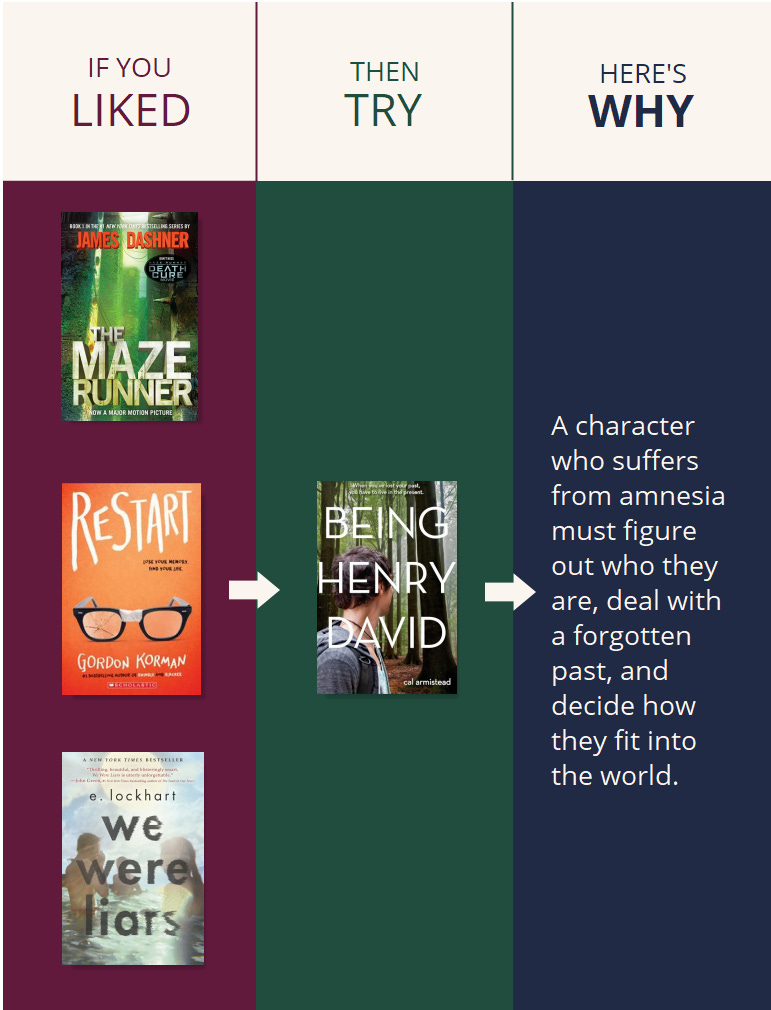
(Side note: if you’ve never used LibraryAware to make book flyers like the one above, I cannot recommend this platform enough. It’s definitely clunkier than Canva, but you can add book cover images, title and author info, as well as a short synopsis to any flyer with a simple title search. LibraryAware is constantly adding templates for heritage months, holidays, popular themes, and more.)
Students spent about 4 minutes at each table, reading the back cover, inside flap, and first few pages, then ranking the books from most to least favorite. It was interesting to hear students’ book comparisons as they progressed around the tables- how their opinions of certain books changed as they came across more/ less appealing titles. The mystery and true-crime obsession came out strong in the rankings, with Being Henry David and 57 Bus receiving the most interest. I love choice-based, immersive reading activities like book tastings because they allow students to feel a sense of ownership over a school assignment and more inclined to read the book if they chose it.
My student learning goal this year is to help our 7th grade intermediate multilingual learners grow in their ability to identify reliable sources and organize information. This week I was able to meet with the intermediate ML teacher about the 7th graders on her caseload and their specific needs. We had an amazing conversation and devised a plan that meets both of our needs.
This teacher has wanted to embed support for class research projects into her pullout groups but has received pushback from her department chairs, who want her to focus on grammar and English language instruction. She wants to teach language in the context of assignments, but she feels the assignments from the general education classroom aren’t being modified enough to match the language stamina of her students. As a school librarian who pushes into general education classrooms for research instruction, I can be that bridge- working with the general education teachers (content experts) to modify assignments and locate accessible source material, and providing targeted research instruction alongside the ML teacher (language expert). Going forward, I am working with our general education teachers to create lessons and source guides for research projects, seeking input from the ML teacher regarding modifications, and pushing into her ML classes to provide research support alongside her language lessons.
To get on my soapbox for a minute, scenarios like this exemplify why it is necessary for middle and high schools to have a school librarian on a flex schedule. So often, classroom teachers and specialists (reading, math, ML/ESL) do not have shared prep periods or other time to meaningfully collaborate. The school librarian is an information expert, not only in helping students locate, evaluate, and organize information, but also in helping teachers share information and collaborate in spite of scheduling logistics. On a broader level, as the needs of our students increase, educators need more time (or at least protection of their existing time) to collaborate with colleagues beyond their teaching team and content-area departments. I hear from colleagues all the time about one perk of the pandemic: one day per week of remote meetings and 4 days of work with students. When I was an English teacher during the pandemic, this “remote day” consisted of a 20 minute virtual check-in with students followed by online office hours, then staff, department, and team meetings in the afternoon. This model isn’t necessarily the answer, but I firmly believe that educators need more time to learn about their students’ needs and prepare to support them in the classroom.
How do you build a culture of reading at your school? What strategies have you found successful in supporting multilingual learners? Share below!
Checking out,
Jennie 🧡
Good for you Jennie for recognizing that MLL students need specific types of support!